LA STORIA DI MARIA
Before she was Nonna,
she was Maria.
A curious girl. A patient grandmother. A kitchen where a lifetime of cooking for others began.
Discover her story↓IT BEGAN BESIDE HER GRANDMOTHER
First, she learned
to watch.
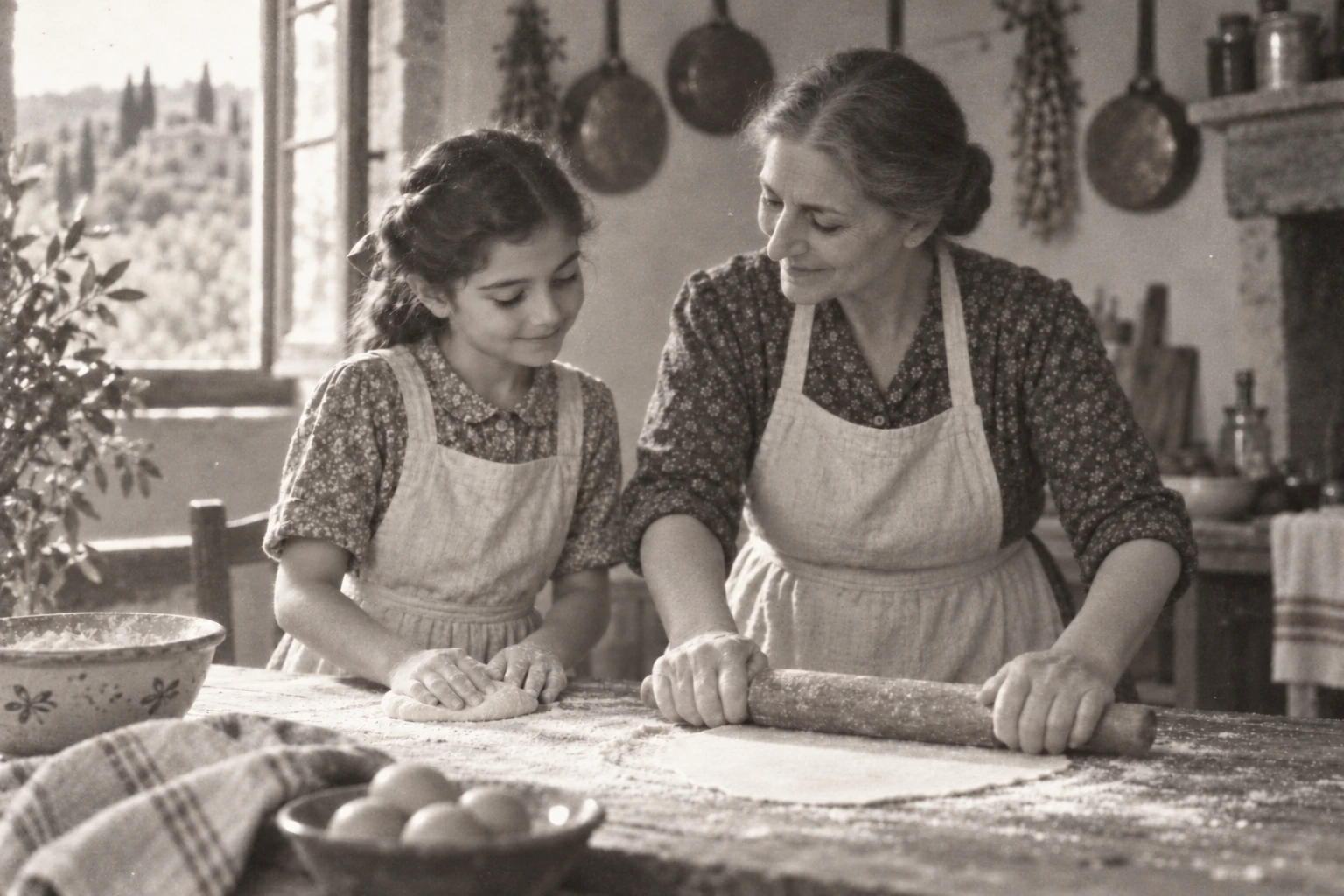
In her grandmother’s kitchen, Maria had her own place: at the end of the table, where the morning light fell. Before she was trusted with the rolling pin, her jobs were to scatter the flour, count the eggs and hold the bowl.
The first dough she rolled was thick on one side and thin on the other. Her grandmother did not throw it away. She folded it, worked it again and showed Maria how to soften the pressure of her hands. Learning, Maria discovered, also meant starting again.
There were things her grandmother never measured: how much flour the dough needed, when to turn down the heat, the basil leaf added at the end. To learn those things, Maria had to stay close. And she did.
“Take your time.
Feel the dough first.”The first lesson Maria kept
FROM DAUGHTER TO MOTHER, FROM MOTHER TO NONNA
Then came a table
of her own.
When Maria began cooking for her own family, she brought her grandmother’s gestures with her. She brought a little notebook too. Before long, its pages held sauce stains, crossed-out quantities and notes squeezed into the margins.
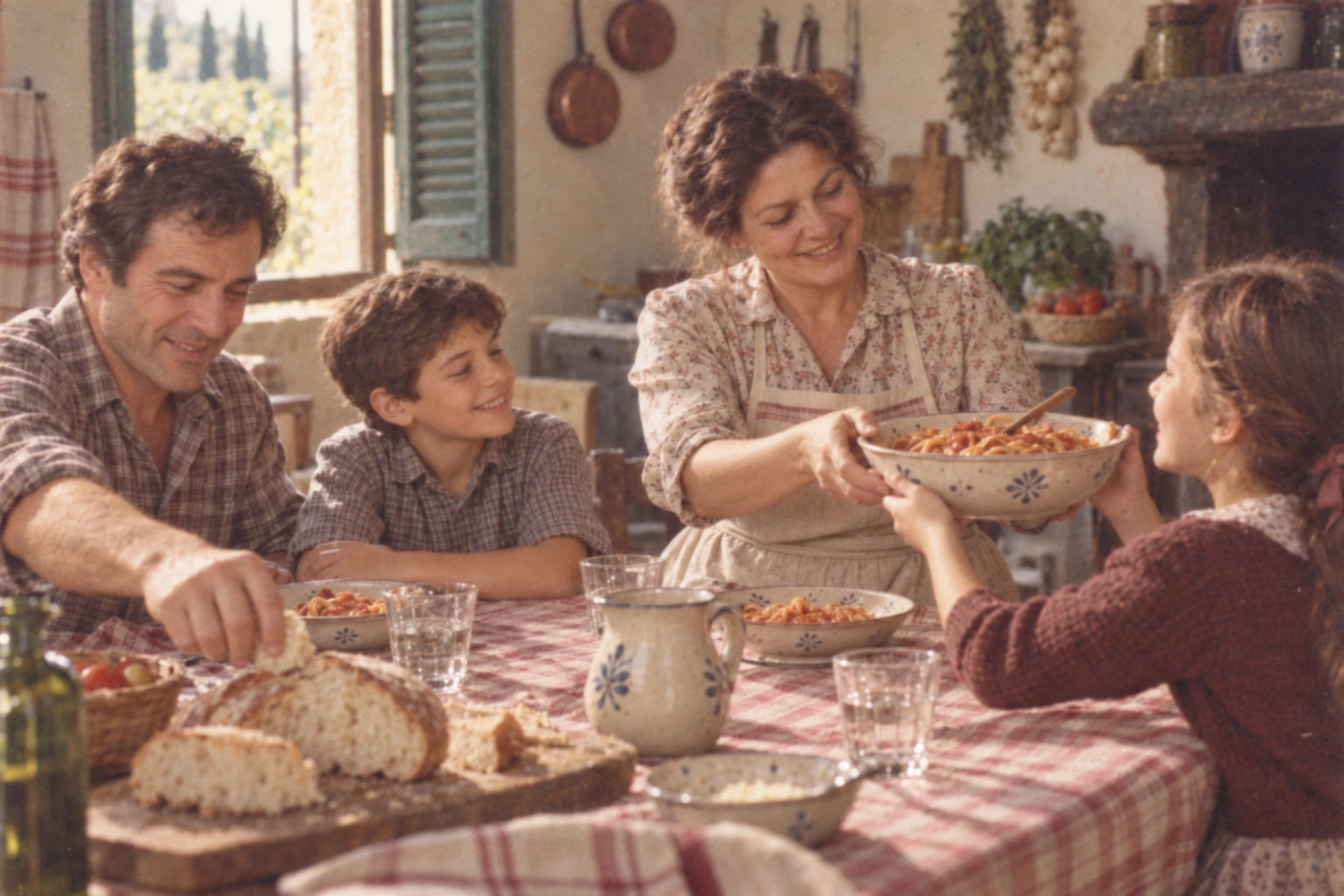
Weekdays called for simple food: pasta with tomatoes, vegetable soup, bread used down to the last crumb. On Sundays she cleared the counter. It was time to roll the dough, prepare the filling and set out a few more plates.
Her children helped seal the ravioli. Some came out big, others crooked. Maria set aside the ones that needed another press and left the rest as they were. At lunch, everyone could find their own.
GUIDED BY YEARS IN THE KITCHEN
Today, her hands
remember almost everything.
Maria still begins her ravioli with the filling: she drains the ricotta, squeezes the spinach dry and tastes it before closing the pasta. Her fingers press around each little mound to push out the air. Only then does she reach for the pastry wheel.
The sauce simmers while she clears the counter. She tastes it, stirs slowly, then tastes again. The notebook stays nearby, but she no longer opens it at every step. Years in the kitchen have taught her what to look for.
Now it is her grandchildren who arrive with questions and their sleeves rolled up. Maria pulls a chair closer, brushes aside a little flour and makes room for them. The lesson continues.
I PICCOLI SEGRETI
Her little secrets.
Passed on by hand.
Let the dough rest.
After kneading, Maria covers the dough and lets it rest before rolling it. If it resists the pin and springs back, she gives it a little longer. Forcing it has never been her way.
Less filling. A better seal.
A raviolo does not need to be filled to bursting. Maria uses small spoonfuls, presses out the air with her fingers and seals the edges firmly before cutting.
Listen to the sauce.
Her tomato sauce cooks at a gentle bubble. Maria stirs, tastes and adjusts according to the tomatoes. The basil goes in near the end, while its fragrance can still make it to the table.
Save a ladle of cooking water.
Before draining the pasta, she saves a little of its cooking water. She adds it gradually to the sauce in the pan, until it coats the pasta. She decides how much by watching and stirring.
DAL QUADERNO DI MARIA
A notebook.
A lifetime at the table.
The pages are marked with sauce, flour and second thoughts. Some recipes have changed. A few reminders never have.
Turn the pages and read Maria’s notes.
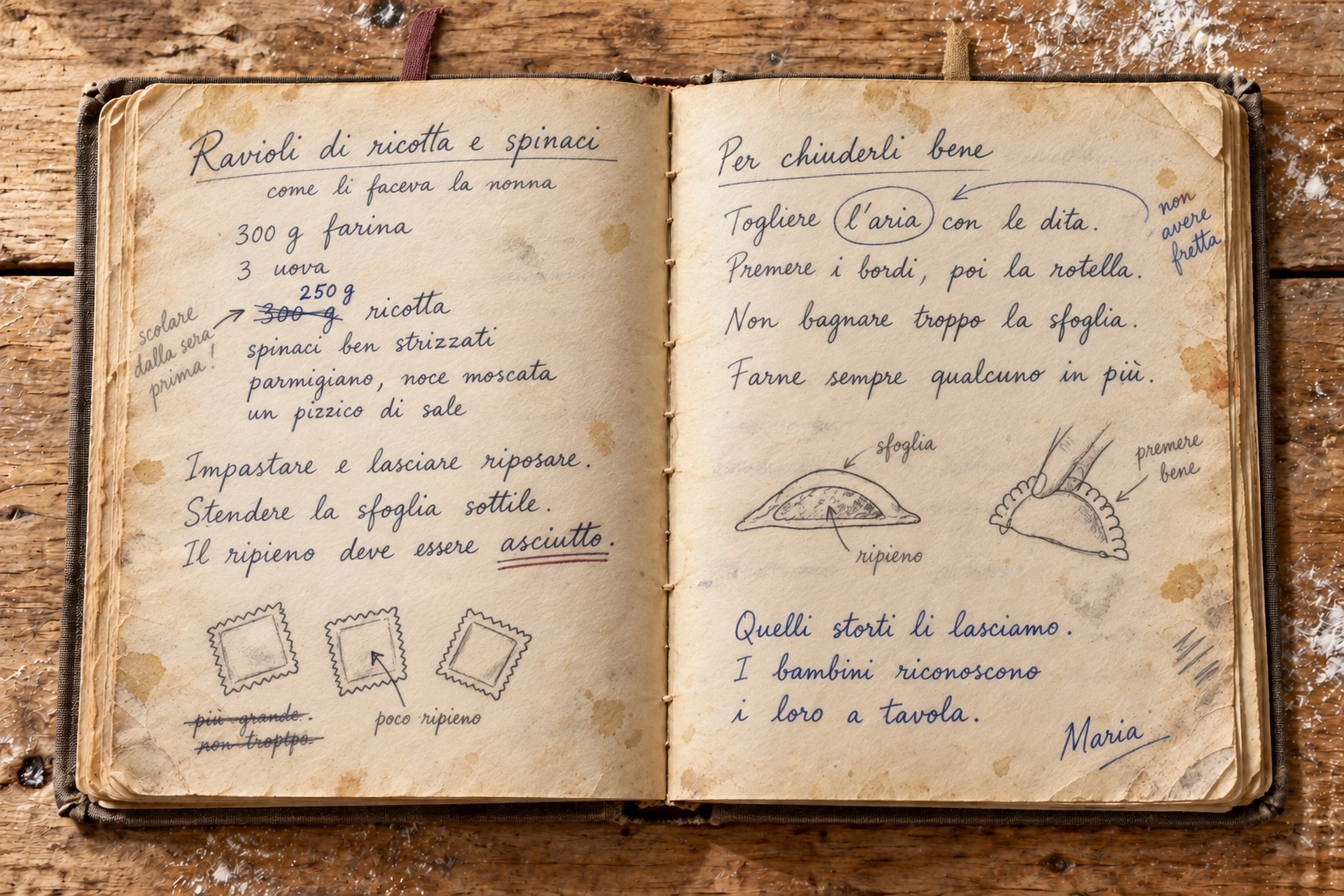
“First I press out the air, then seal the edges. The pastry wheel comes afterwards. The crooked ones? We recognise them at the table.”
COME DICO IO…
“Anyone who comes into my kitchen ends up with flour on their hands. I ask them to taste the sauce—then I taste it again myself. And we keep the crooked ravioli. The children like finding the ones they made.”Maria
A LESSON PASSED ON
The same lesson.
A new pair of hands.
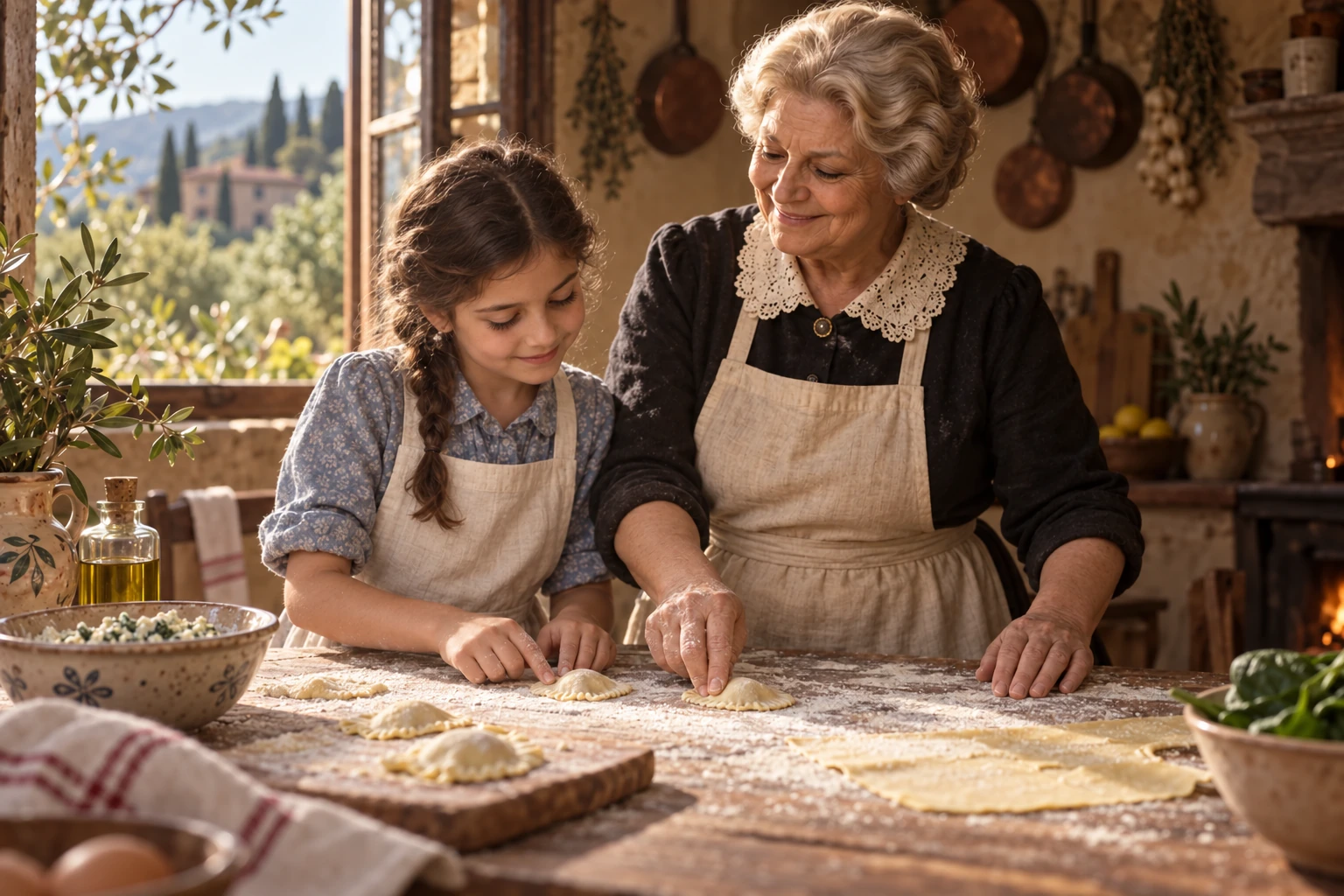
Once, Maria watched her grandmother’s hands. Now a little girl watches hers. The first raviolo is uneven. Maria leaves it on the board and makes room for another.
“Take your time. Feel the dough first.”
The words are the same. Only the hands have changed.
Con amore, Maria.Donna Maria and her family are fictional brand characters. The family images were created to tell this story; they are not archival photographs.